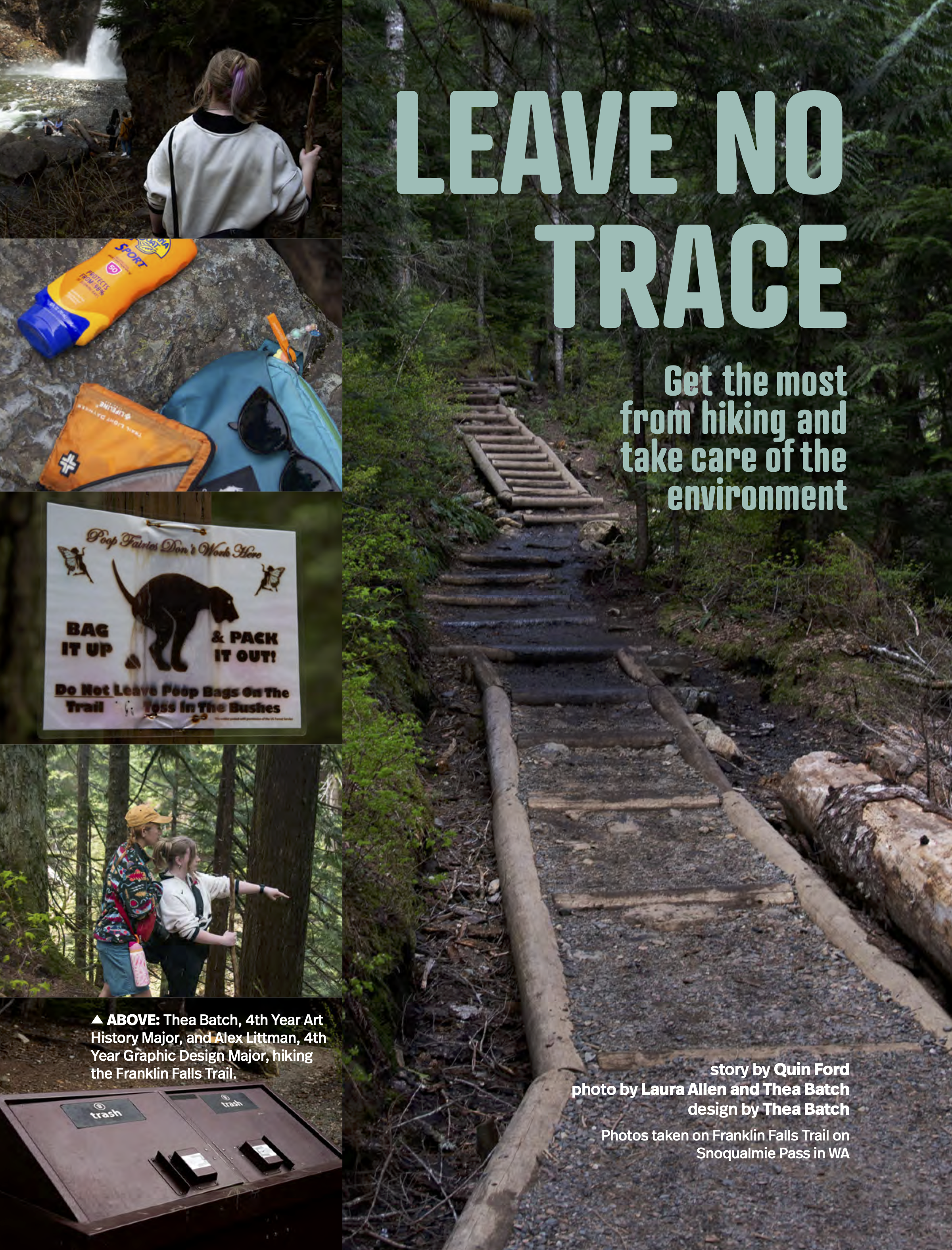
Leave No Trace: Get the most from hiking and take care of the environment
story by Quin Ford, photos by Laura Allen and Thea Batch, design by Thea Batch
Did you know that Washington State has nearly 7,000 miles of trails in state parks? Considering the United States is roughly 2,800 miles long from East to West, Washington State’s trails alone are over twice as long as the entire country. Given the incredible size of these beautiful trails, there’s a certain amount of responsibility for those who recreate and indulge in the wonders Washington’s trails offer.








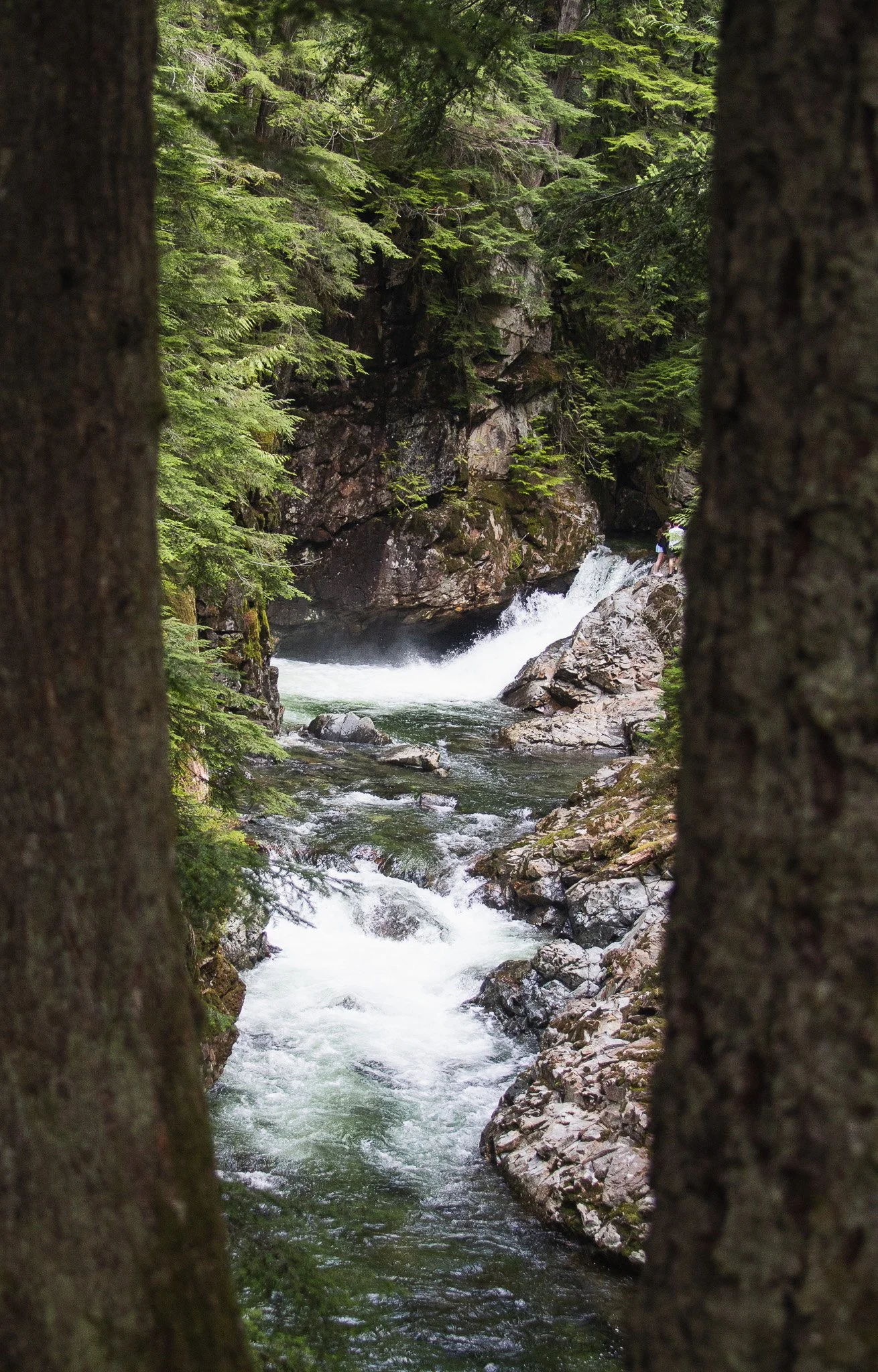
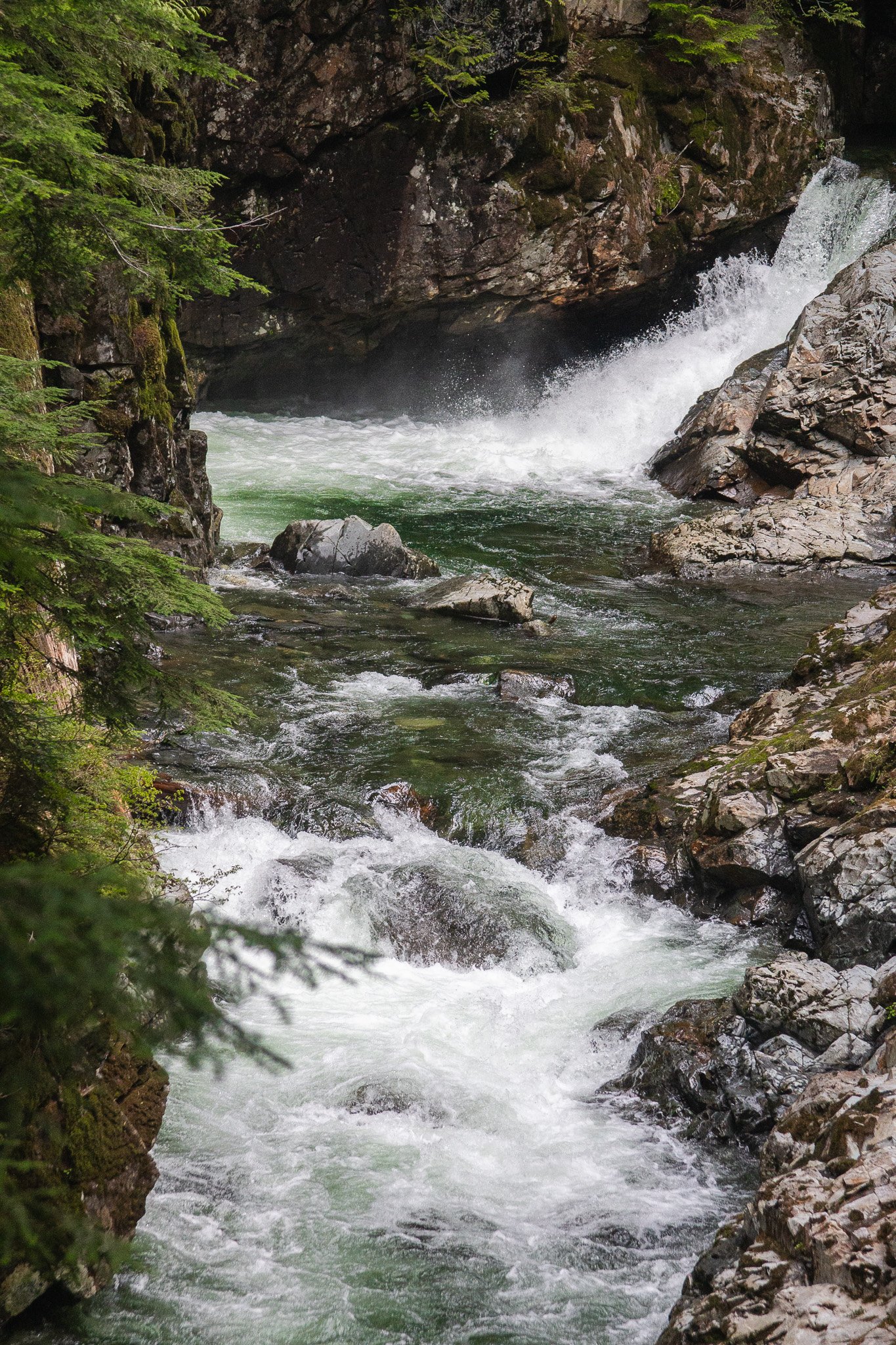
‘Leave No Trace’ Principles
With over 8 million people residing in Washington and millions visiting the trails from all across the world, it is critical that hikers and campers adhere to the rules and regulations needed to take care of the land. Washington Trails Association’s (WTA) website includes seven ‘Leave No Trace’ (LNT) practices that hikers and campers should commit to when exploring Washington's trails. These include: Plan Ahead and Prepare, Travel and Camp on Durable Surfaces, Dispose of Waste Properly, Leave What You Find, Minimize Campfire Impacts, Respect Wildlife and Be Considerate of Others.
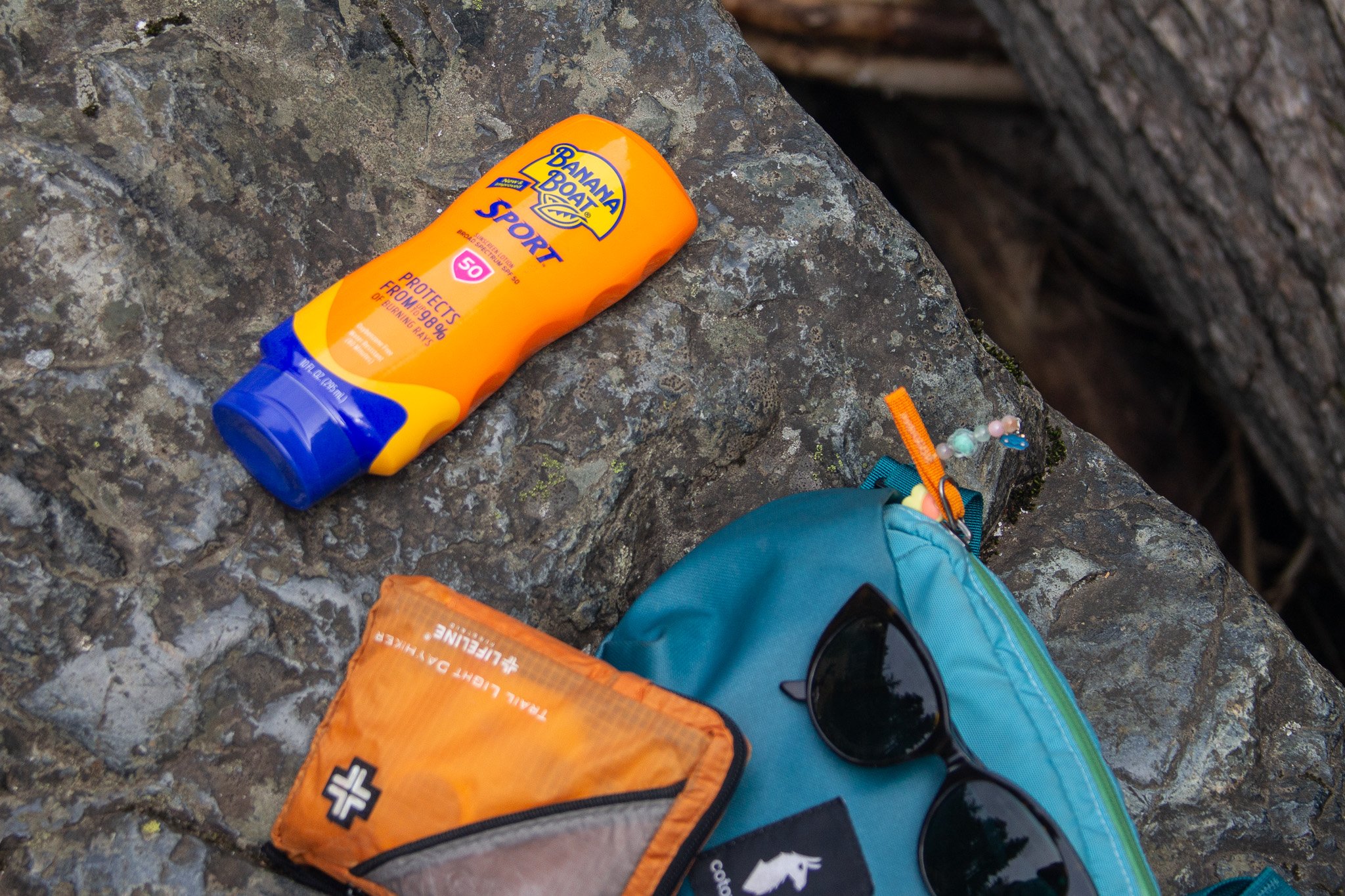
While this may seem like a lot to keep up with, Senior Communications and Marketing Coordinator for WTA, Joseph Gonzalez, says “The main thing when it comes to hiking etiquette is putting yourself in a place to succeed… Developing a plan, knowing when to turn around, having a backup trail option in mind and telling somebody where you are.” Take it from Gonzalez, it all starts with LNT practice number one: ‘Plan Ahead and Prepare.’
Another LNT principle that tends to get overlooked lands under practice number seven, ‘Be Considerate of Others,’ specifically respecting noise levels. WTA’s LNT website says it best: “Let nature's sounds prevail. Avoid loud voices and noises.” For many, listening to music while hiking can be a therapeutic practice and can enhance your connection with nature. While playing music on a speaker is known for getting a party started, maybe save that for the club.
“Music on trail can be really lovely. I like to listen to music on trail too, but if you want to play it, I recommend you keep it to earphones,” Gonzalez says. While it is important that you get the most out of your hiking experience, you also want to make sure you are fully aware of your surroundings. “One earphone in and one earphone out is pretty good because you still want to be aware of what's going on around you.”

Campers, Stay Aware
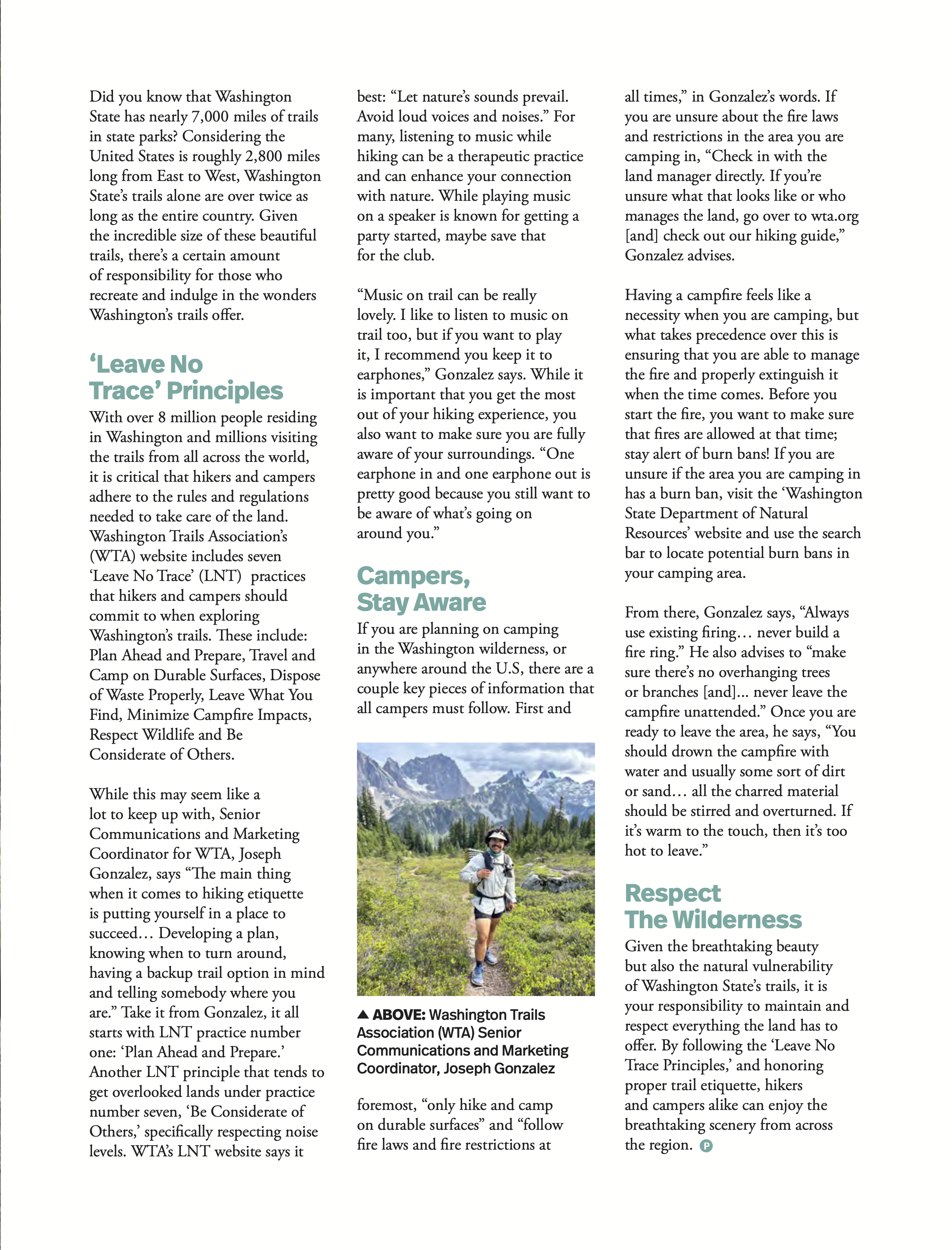
If you are planning on camping in the Washington wilderness, or anywhere around the U.S, there are a couple key pieces of information that all campers must follow. First and foremost, “only hike and camp on durable surfaces” and “follow fire laws and fire restrictions at all times,” in Gonzalez’s words. If you are unsure about the fire laws and restrictions in the area you are camping in, “Check in with the land manager directly. If you’re unsure what that looks like or who manages the land, go over to wta.org [and] check out our hiking guide,” Gonzalez advises.
Having a campfire feels like a necessity when you are camping, but what takes precedence over this is ensuring that you are able to manage the fire and properly extinguish it when the time comes. Before you start the fire, you want to make sure that fires are allowed at that time; stay alert of burn bans! If you are unsure if the area you are camping in has a burn ban, visit the ‘Washington State Department of Natural Resources’ website and use the search bar to locate potential burn bans in your camping area.
From there, Gonzalez says, “Always use existing firing… never build a fire ring.” He also advises to “make sure there’s no overhanging trees or branches [and]... never leave the campfire unattended.” Once you are ready to leave the area, he says, “You should drown the campfire with water and usually some sort of dirt or sand… all the charred material should be stirred and overturned. If it’s warm to the touch, then it’s too hot to leave.”
Respect The Wilderness
Given the breathtaking beauty but also the natural vulnerability of Washington State’s trails, it is your responsibility to maintain and respect everything the land has to offer. By following the ‘Leave No Trace Principles,’ and honoring proper trail etiquette, hikers and campers alike can enjoy the breathtaking scenery from across the region.