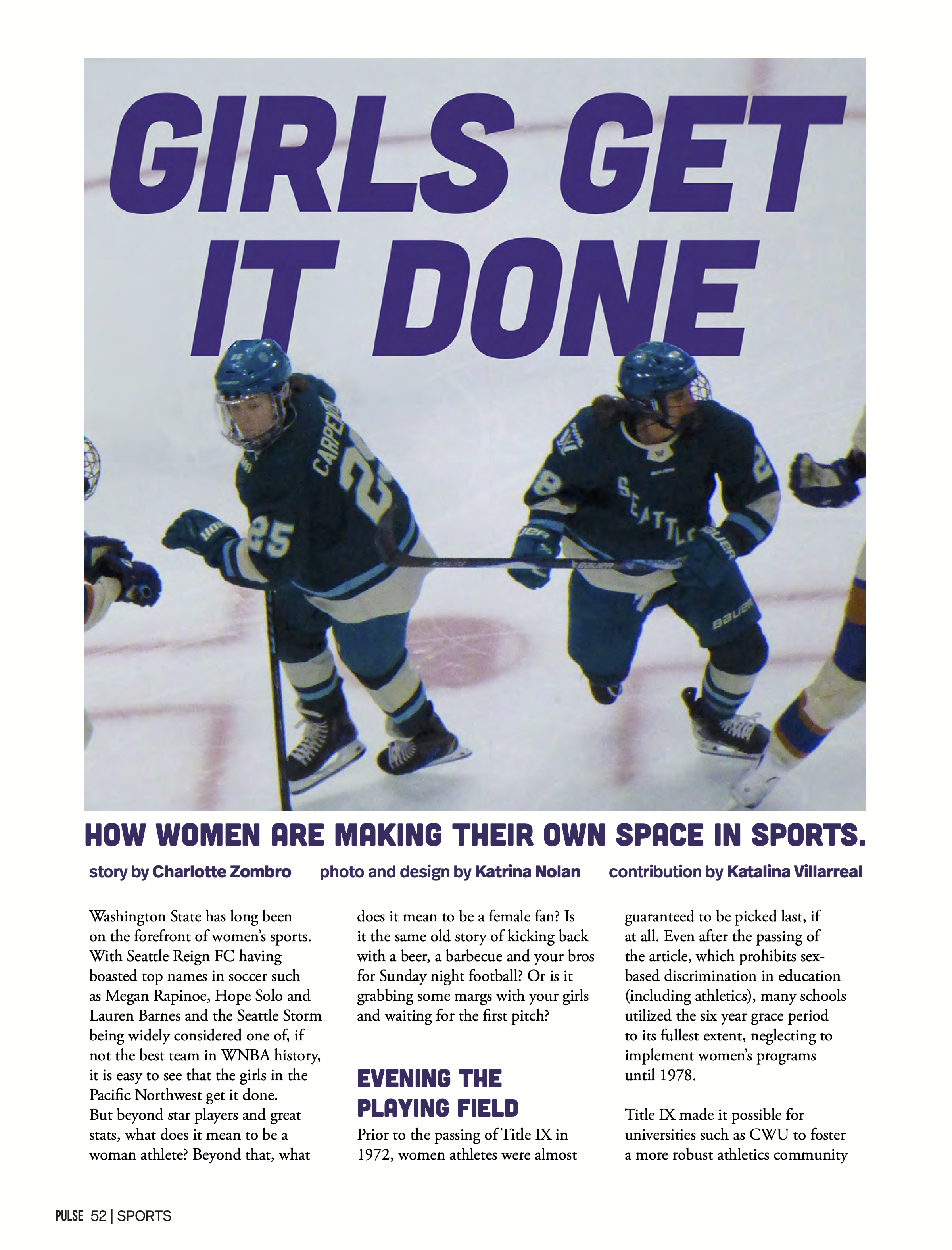
Girls Get It Done
How women are making their own space in sports.
story by Charlotte Zombro, photo and design by Katrina Nolan, contribution by Katalina Villareal
Washington State has long been on the forefront of women’s sports. With Seattle Reign FC having boasted top names in soccer such as Megan Rapinoe, Hope Solo and Lauren Barnes and the Seattle Storm being widely considered one of, if not the best team in WNBA history, it is easy to see that the girls in the Pacific Northwest get it done.
But beyond star players and great stats, what does it mean to be a woman athlete? Beyond that, what does it mean to be a female fan? Is it the same old story of kicking back with a beer, a barbecue and your bros for Sunday night football? Or is it grabbing some margs with your girls and waiting for the first pitch?
Whether you prefer Sue or Larry, these birds are getting into sports, and they’re doing it their way.
Evening the Playing Field
Prior to the passing of Title IX in 1972, women athletes were almost guaranteed to be picked last, if at all. Even after the passing of the article, which prohibits sex-based discrimination in education (including athletics), many schools utilized the six year grace period to its fullest extent, neglecting to implement women’s programs until 1978.
Title IX made it possible for universities such as CWU to foster a more robust athletics community and open doors for many students and athletes that wouldn’t have had the chance to explore those avenues otherwise.
This new autonomy for women brought about a cultural shift. In a little more than a century women had gone from tentatively being allowed in schools, to just barely skirting their way into recreational college athletics, to being some of the most nationally and globally recognized professional athletes, with the Women’s World Cup now being one of the most highly viewed tournaments in the world. However, female sports fans still face scrutiny from their male counterparts. According to Abbie Grossaint, a sports management major at CWU, it is hard not to notice a change in tone when she tries to talk sports.
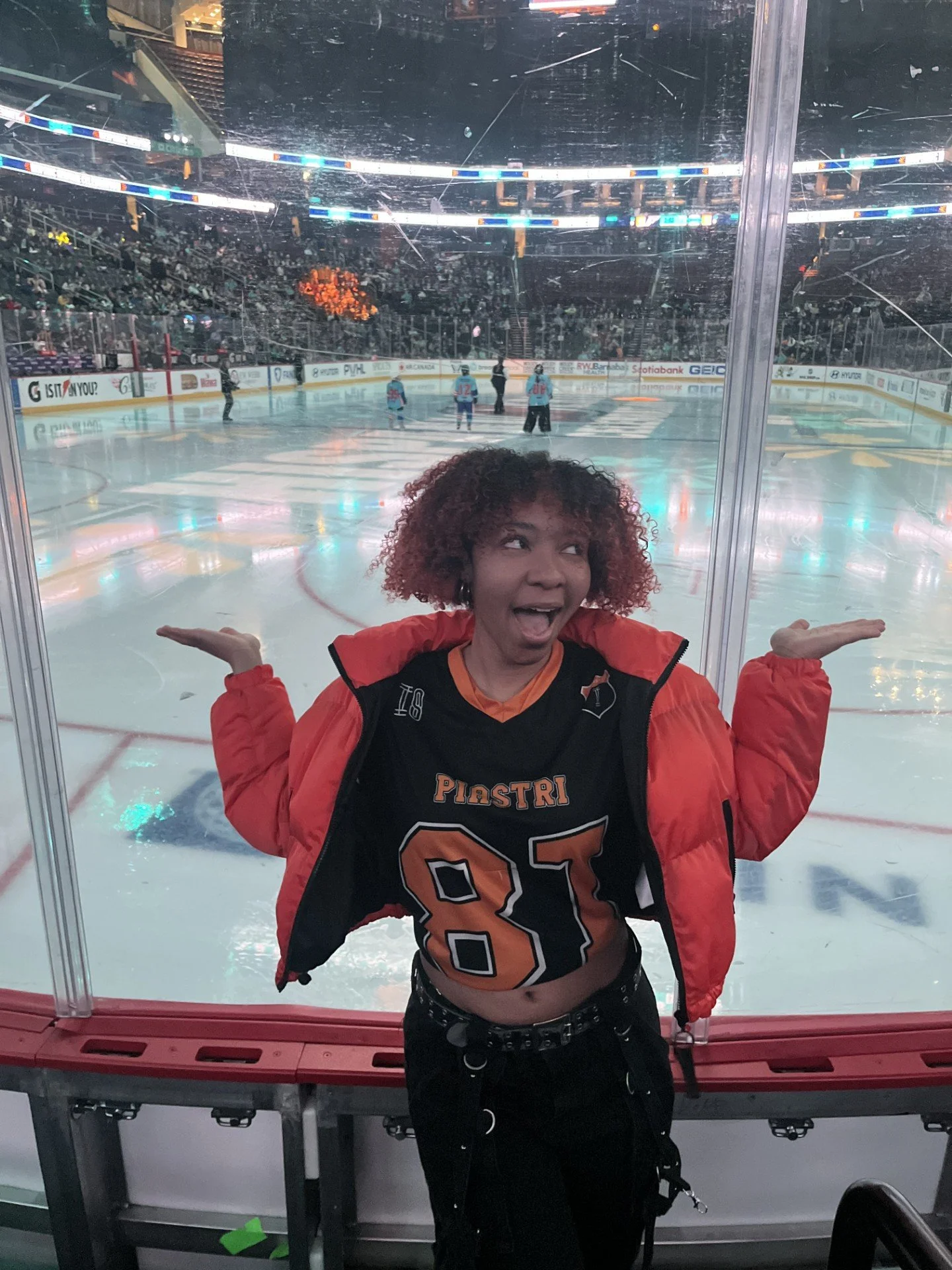
“Growing up, my dad was a big sports fan, so I grew up watching NASCAR and all that, but what really stuck was football,” says Grossaint. “I'm a big football fan, that is something I want to work with in the future.”
Claiming the Chicago Bears as her NFL team, Groissaint is no stranger to disappointment in the sporting world. “People are always surprised when you know just a little bit about sports,” Grossaint explains, “and I think that will never change, honestly.”
Grossaint speaks of her experience interning in equipment management at CWU and how she has had to work significantly harder and put in more effort than her male counterparts for the same positions.
“I've experienced it at Central,” she says, “being looked down on because I wanted to do something, but they don't see a woman wanting to do it. But I’ve been able to get my spot and kind of out work the person that they wanted to have that spot.”
“Women are becoming fans more and more every year of sports. But I think there always will be a thing of like, ‘this is a man’s world,’” worries Grossaint.
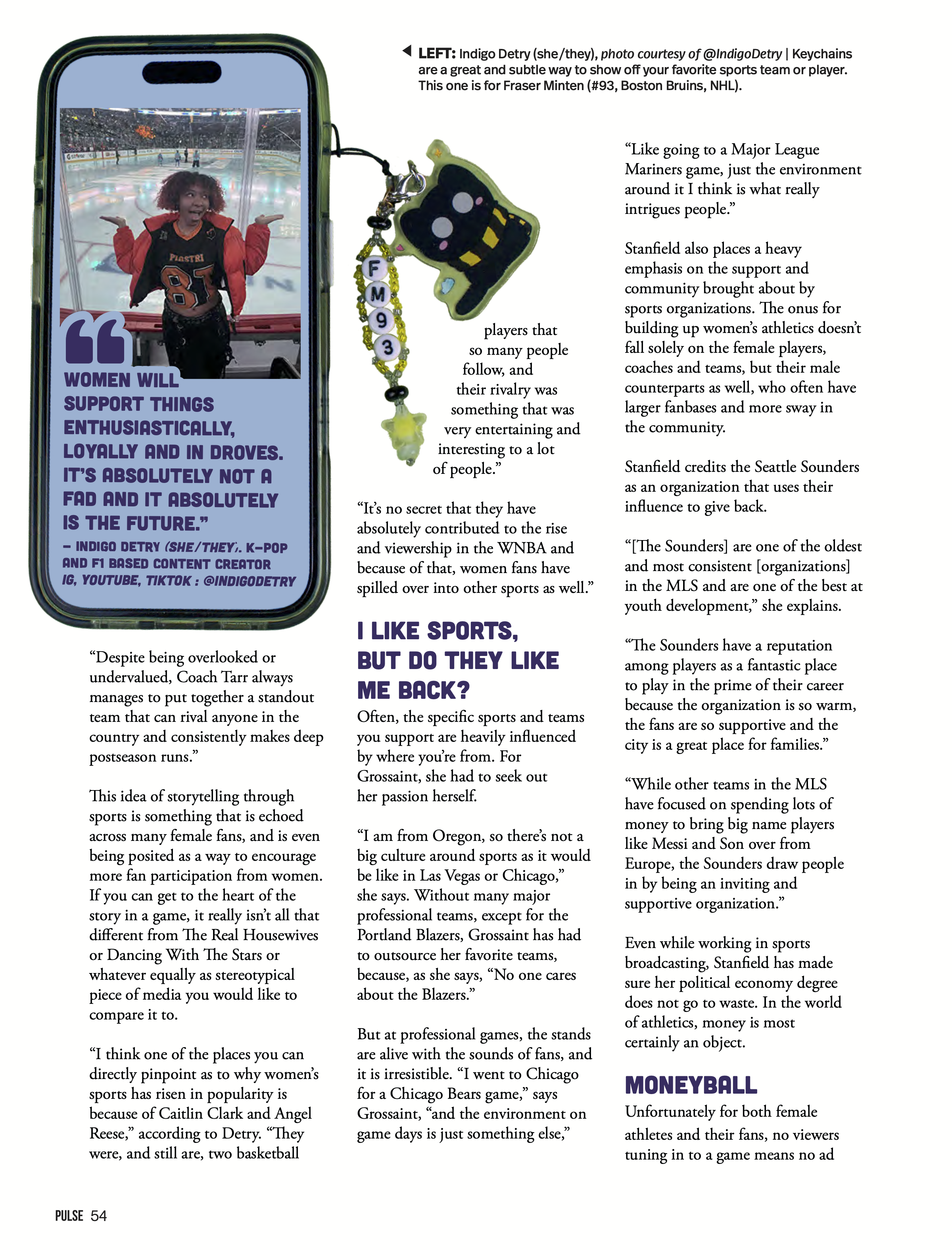
According to fan Indigo Detry, female sports fans will create spaces for themselves whether men want to help them or not.
“Almost all sports are male dominated, and more often than not, when men dominate spaces, they tend to push women out, or we weren’t allowed in to begin with,” Detry says, “A lot of men don’t know how to create spaces that are open and inviting, which is why so many women end up creating spaces for themselves.”
Despite the uphill battle that faces them, a common thread between women in all aspects of athletics is the drive to subvert expectations and get what they have worked for, regardless of someone’s willingness to give it up.
Following the Ball or Following the Plot
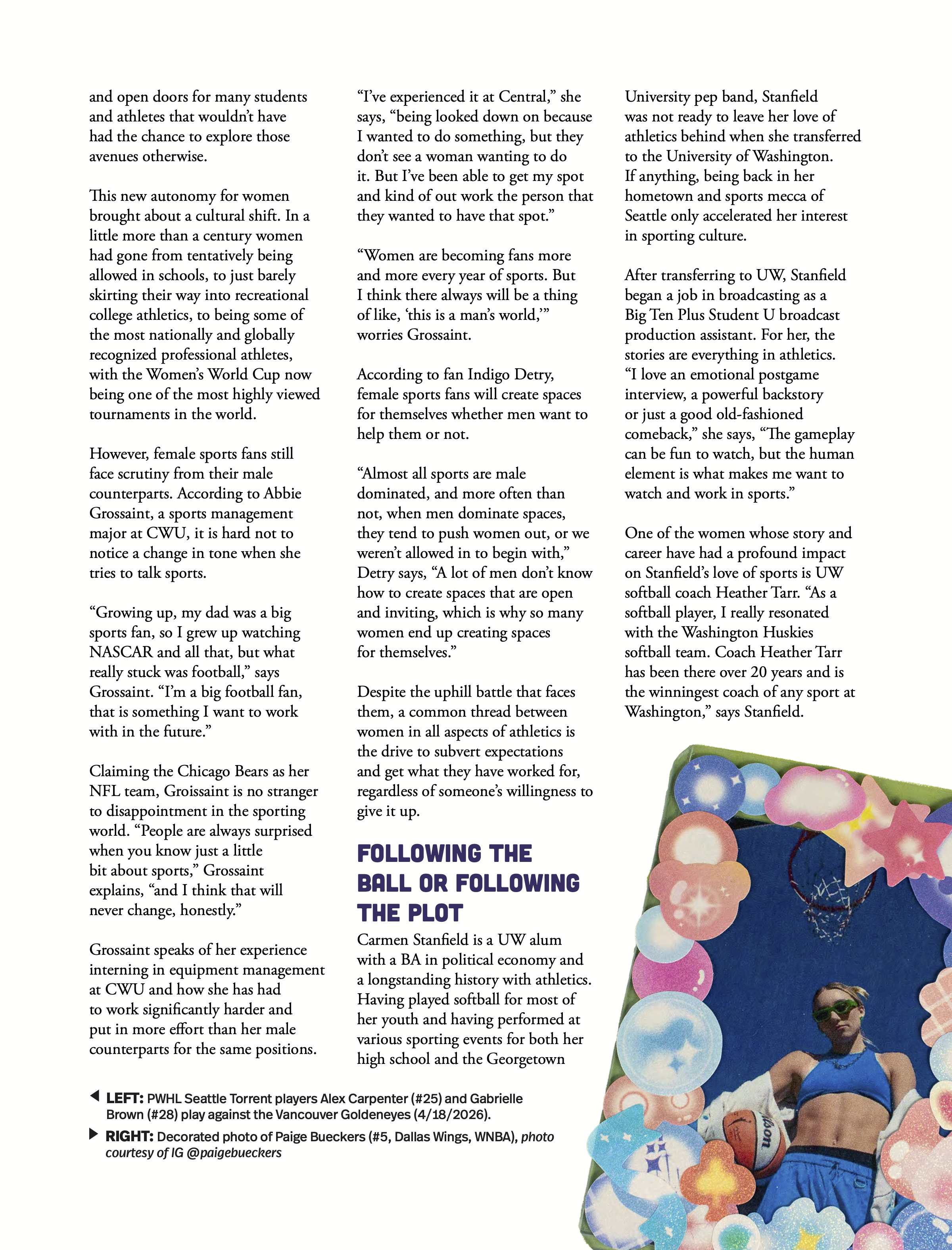
Carmen Stanfield is a UW alum with a BA in political economy and a longstanding history with athletics. Having played softball for most of her youth and having performed at various sporting events for both her high school and the Georgetown University pep band, Stanfield was not ready to leave her love of athletics behind when she transferred to the University of Washington. If anything, being back in her hometown and sports mecca of Seattle only accelerated her interest in sporting culture.
After transferring to UW, Stanfield began a job in broadcasting as a Big Ten Plus Student U broadcast production assistant. For her, the stories are everything in athletics. “I love an emotional postgame interview, a powerful backstory or just a good old-fashioned comeback,” she says, “The gameplay can be fun to watch, but the human element is what makes me want to watch and work in sports.”
One of the women whose story and career have had a profound impact on Stanfield’s love of sports is UW softball coach Heather Tarr. “As a softball player, I really resonated with the Washington Huskies softball team. Coach Heather Tarr has been there over 20 years and is the winningest coach of any sport at Washington,” says Stanfield.
“Despite being overlooked or undervalued, Coach Tarr always manages to put together a standout team that can rival anyone in the country and consistently makes deep postseason runs.”
This idea of storytelling through sports is something that is echoed across many female fans, and is even being posited as a way to encourage more fan participation from women. If you can get to the heart of the story in a game, it really isn’t all that different from The Real Housewives or Dancing With The Stars or whatever equally as stereotypical piece of media you would like to compare it to.
“I think one of the places you can directly pinpoint as to why women’s sports has risen in popularity is because of Caitlin Clark and Angel Reese,” according to Detry. “They were, and still are, two basketball players that so many people follow, and their rivalry was something that was very entertaining and interesting to a lot of people.”
“It’s no secret that they have absolutely contributed to the rise and viewership in the WNBA and because of that, women fans have spilled over into other sports as well.”
I Like Sports — But Do They Like Me Back?
Often, the specific sports and teams you support are heavily influenced by where you’re from. For Grossaint, she had to seek out her passion herself.
“I am from Oregon, so there's not a big culture around sports as it would be like in Las Vegas or Chicago,” she says. Without many major professional teams, except for the Portland Blazers, Grossaint has had to outsource her favorite teams, because, as she says, “No one cares about the Blazers.”
But at professional games, the stands are alive with the sounds of fans, and it is irresistible. “I went to Chicago for a Chicago Bears game,” says Grossaint, “and the environment on game days is just something else,”
“Like going to a Major League Mariners game, just the environment around it I think is what really intrigues people.”
Stanfield also places a heavy emphasis on the support and community brought about by sports organizations. The onus for building up women’s athletics doesn’t fall solely on the female players, coaches and teams, but their male counterparts as well, who often have larger fanbases and more sway in the community. Stanfield credits the Seattle Sounders as an organization that uses their influence to give back.
“[The Sounders] are one of the oldest and most consistent [organizations] in the MLS and are one of the best at youth development,” she explains.
“The Sounders have a reputation among players as a fantastic place to play in the prime of their career because the organization is so warm, the fans are so supportive and the city is a great place for families.”
“While other teams in the MLS have focused on spending lots of money to bring big name players like Messi and Son over from Europe, the Sounders draw people in by being an inviting and supportive organization.”
Even while working in sports broadcasting, Stanfield has made sure her political economy degree does not go to waste. In the world of athletics, money is most certainly an object.
Moneyball
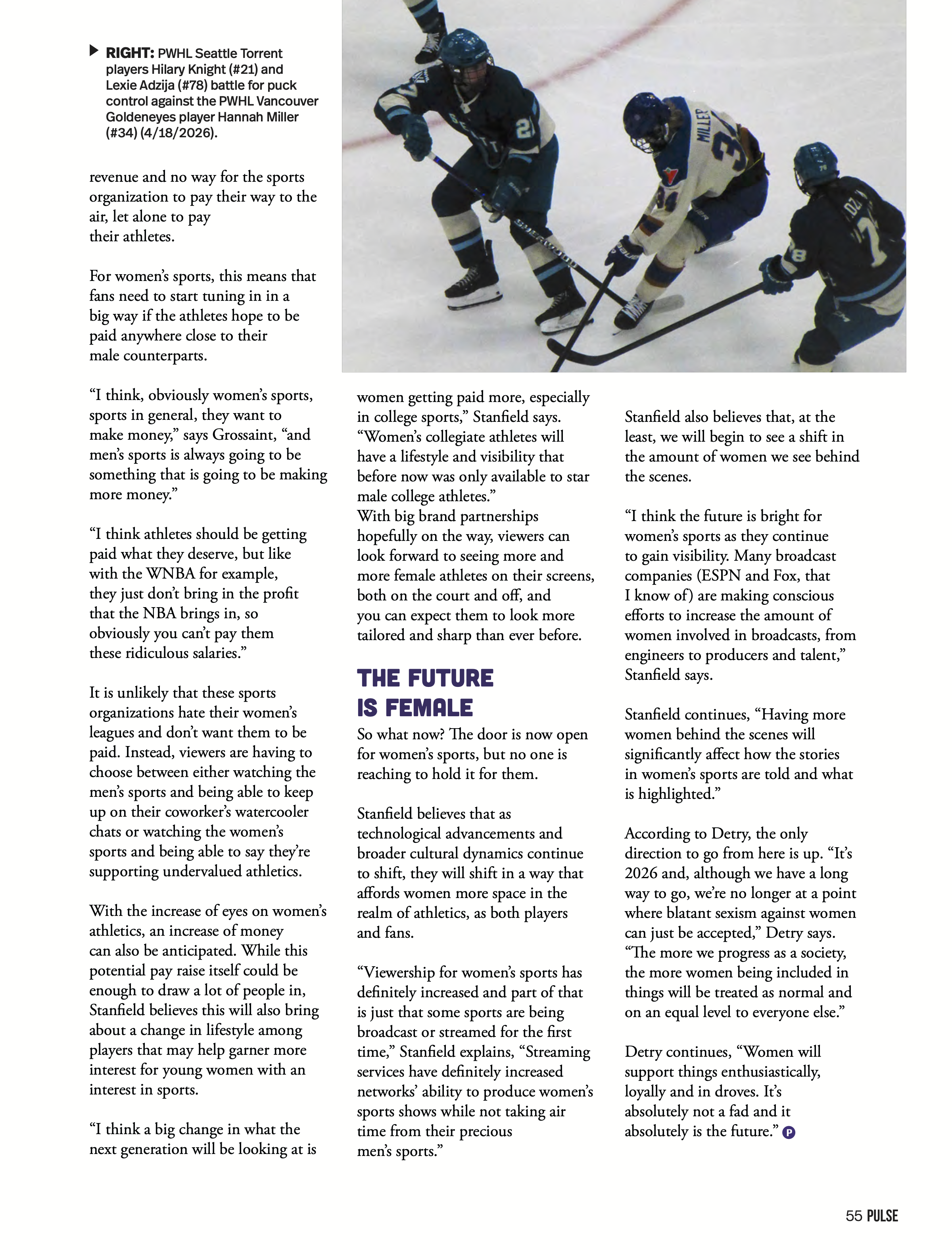
Unfortunately for both female athletes and their fans, no viewers tuning in to a game means no ad revenue and no way for the sports organization to pay their way to the air, let alone to pay their athletes.
For women’s sports, this means that fans need to start tuning in in a big way if the athletes hope to be paid anywhere close to their male counterparts.
“I think, obviously women's sports, sports in general, they want to make money,” says Grossaint, “and men's sports is always going to be something that is going to be making more money.”
“I think athletes should be getting paid what they deserve, but like with the WNBA for example, they just don't bring in the profit that the NBA brings in, so obviously you can't pay them these ridiculous salaries.”
It is unlikely that these sports organizations hate their women’s leagues and don’t want them to be paid. Instead, viewers are having to choose between either watching the men’s sports and being able to keep up on their coworker’s watercooler chats or watching the women’s sports and being able to say they’re supporting undervalued athletics.
With the increase of eyes on women’s athletics, an increase of money can also be anticipated. While this potential pay raise itself could be enough to draw a lot of people in, Stanfield believes this will also bring about a change in lifestyle among players that may help garner more interest for young women with an interest in sports.
“I think a big change in what the next generation will be looking at is women getting paid more, especially in college sports,” Stanfield says. “Women’s collegiate athletes will have a lifestyle and visibility that before now was only available to star male college athletes.”
With big brand partnerships hopefully on the way, viewers can look forward to seeing more and more female athletes on their screens, both on the court and off, and you can expect them to look more tailored and sharp than ever before.
The Future is Female
So what now? The door is now open for women’s sports, but no one is reaching to hold it for them. Stanfield believes that as technological advancements and broader cultural dynamics continue to shift, they will shift in a way that affords women more space in the realm of athletics, as both players and fans.
“Viewership for women’s sports has definitely increased and part of that is just that some sports are being broadcast or streamed for the first time,” Stanfield explains, “Streaming services have definitely increased networks’ ability to produce women’s sports shows while not taking air time from their precious men’s sports.”
Stanfield also believes that, at the least, we will begin to see a shift in the amount of women we see behind the scenes.
“I think the future is bright for women’s sports as they continue to gain visibility. Many broadcast companies (ESPN and Fox, that I know of) are making conscious efforts to increase the amount of women involved in broadcasts, from engineers to producers and talent,” Stanfield says. Stanfield continues, “Having more women behind the scenes will significantly affect how the stories in women’s sports are told and what is highlighted.”
According to Detry, the only direction to go from here is up. “It’s 2026 and, although we have a long way to go, we’re no longer at a point where blatant sexism against women can just be accepted,” Detry says. “The more we progress as a society, the more women being included in things will be treated as normal and on an equal level to everyone else.”
Detry continues, “Women will support things enthusiastically, loyally and in droves. It’s absolutely not a fad and it absolutely is the future.”