
Cool Cat: Paul Riordan
Q&A by Amal Dahi, photo contribution by Paul Riordan
Paul Riordan is a Central Washington University alum who earned his bachelor’s degree in Public Relations, Advertising, and Applied Communications. Working in commercial, television and film production since 2013, he has collaborated with Motion State, an award-winning Seattle production company known for its commercial work. His experience includes contributions to notable productions such as War for the Planet of the Apes, Kimi and Tasting Wild. Most recently, he worked on the 2026 narrative film Passenger, which was filmed in Washington state.
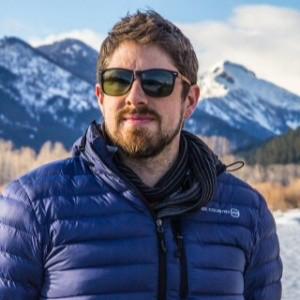
Q: What brought you to the university? And what was your major?
One of the biggest things is proximity. Central really isn't that far away from home. For me, living over on the west side (I'm from Edmonds), I like Ellensburg, and that was kind of the biggest thing — I kind of knew what I was looking to do. I ended up getting a PR major through the comm school. And then, my intention was to also get a business minor.
It's a very much, well-known, business school too. I like the place, I like the cold. Here was a bit of a difference. It was a bit of a culture shock, going from the West Side to here, but ended up liking it, stayed, and lived there for two years. I got my associate's degree from Mansfield Community College and then ended up moving onto campus there, or moving to Ellensburg.
Q: How would you describe the current state of Seattle's commercial production industry?
What's interesting is, it seems to be doing pretty, pretty well. The film industry as a whole is, somewhat of a contraction. And I'm talking specifically more about narrative. But things go into Canada. Great Britain, Eastern Europe, where things are to be done for quite a bit cheaper. But that being said, commercials still need to be made.
As a matter of fact, I’m working on a going to be working on a commercial that will be filming Kittitas County here, next month [spring 2026]. So, from that particular standpoint, the commercials are still strong. There's always a need for commercials. Whether it's kind of the corporate type of stuff, all the way to the broadcast commercials and everything in between. I would also consider photoshoots, as well. And that realm, too, as well.
So, the industry is there, other places such as Los Angeles, for example. I've actually seen a massive decline. A lot of it has to do with a lot of politics and labor. Like the mayoral race. That's actually a hot button issue is actually film production and how film production in LA is actually been in contraction. And a lot of it has to do with the city politics and the cost of everything. Washington State is actually a great place. To do advertising because, first of all, it's beautiful. Not only beauty, but all these different biomes, as well. Seattle is completely different than, let's just say, Kittitas County or even Grant County. Next door type situation to contest. You have the woods, the mountains, the desert, the city, the coast, these beaches and islands and everything. So, it makes it a really attractive place for advertisers to come in, from a beauty standpoint. But then again, you also have some very big companies that spend a lot of money on advertising. You have Microsoft, Amazon, T-Mobile. That's a huge one.
Starbucks. Well, unfortunately, they're moving to a different state. There's some kind of politics involved in that, too. The commercial industry is healthy, and one of the things that I think is really important to say about the advertising industry specifically is, it does provide jobs for creatives. They're the ones that provide the highest-paying jobs. Sometimes they're super quick and intense. There is a movement and a structure to it. It's a lot of stuff. So Bridgestone, Firestone, they spend a ton of money in Washington state. One of which is, the locations you get out of here, and also the weather is pretty conducive to, “Hey! We want something temperamental.” That's kind of what works out for Washington state, especially on the West side, like, “Hey! We want some rain.” “Yeah, we got that too.”
So, it's a good thing, and that's really the way you want to be a filmmaker — get into commercials. That's a good way of getting money, getting on set. And fingers crossed, we get some more narrative. The narrative is coming through. As a matter of fact, there is a narrative that was shot in Kittitas County that's coming out in theaters. It's called Passenger. It was with Paramount. I was one of the location managers on that film last year. So, we shot over and cleared highway ten. We did a road closure out there. If you're heading west on I-90 from Ellensburg, we ended up shooting there too, as well. We rented a bunch of semis, and there's a narrative dialogue. It was cool, but I was stressed out. Hopefully, there's going to be more narrative work coming through. The state offers so much to filmmakers.
Q:What factors do you think have contributed to Seattle's recent growth in commercial production?
One of the biggest ones is, unfortunately, California doing its California thing. There's been a lot of advertisers that just say, “Hey, you know what? We don't want to be here anymore.” You know, there's the high cost of labor locations, red tape that ends up going through. I think that has made it. There's been actually a lot more work coming into Washington state, which is a very film-friendly state. So, I think that's a factor. I wish I could tell you about this commercial I'm working on, but it was a it was a multi-state effort. As a matter of fact, it was Washington, Idaho, Montana, Wyoming, Utah, Colorado and California. It was Washington. And a lot of it has to do with what locations are, and how can you make things work? There were some complications with certain other states when it came to permitting. We're able to make it work; we're able to get things permitted. In the time, it takes. There’s California kind of not being a thing. And then also, just how beautiful the state is.
There's also a film incentive too, which really helped out. Typically, film incentives are offered for narrative. Trying to attract bigger movies and everything. But the states open it up to commercials, which is big. Because that also just keeps us on the radar as, a location to end up shooting, and, in addition to it, continues to provide jobs for, crew members. And as a matter of fact, the reason why we went over to Kittitas County and shot at Central is like, well, there's this film incentive, and we get a little extra. It's much easier. I like that filming at Central was actually a lot easier than it is at some other universities there. Which was great to do. Also, it's kind of cool to come back home to campus there. I think kind of the big three things that are going to be like, politics in California, how beautiful the state is. And then, you know, the big thing too is going to be that film incentive.
How is the industry sourcing local creatives, filmmakers, photographers and others?
There's a mix of coming to things. So, when a production is done in-state, whether it be narrative or commercial, you have a mix of locals and also people that are coming from out of state. The cool thing about Washington is that there’s a lot of jobs; these projects are imported right from different states, type situation. So, you might have an advertising agency from Nashville, New York, Chicago, Los Angeles, or wherever it might end up choosing, Washington State. So sometimes you end up getting some filmmakers from out of state to come in. But then there's also, you know, the filmmakers that are here too. One of the biggest things is that, you know, in the film industry, it's not for everybody. I mean, the hours are long, the work can be very inconsistent. You'll end up getting more and more opportunities to work. But you also do see a wide plethora of other departments. You might want to be in the camera department, grip electric department, production department, art department. Special effects, whatever it might end up being. And it's just a good way to start from the bottom. That's where I started. As I started, I actually had a different career. I just got doing marketing, beforehand, marketing sales. And then I ended up being like, saying, I don't like being in an office. And I had a buddy who, funny enough, who's actually another alumni from Central, as a production assistant, and just kind of from there. Really, that's where things kind of went from there, is doing that. Some other ways of getting in is, there might be advertising agencies, or other in-house production companies can kind of work there. You can also see what other people have made mistakes. Sometimes mistakes are the biggest thing that you end up learning from, and I much rather learn from other people's mistakes, not my own. They hurt quite a bit less when it comes to that. I'm going to do it a different way that's going to succeed. So, I think that's really the best way. It's really those connections you end up making, some people have left the industry, some people have stayed in the industry, and kind of moved up. I get calls from producers all the time. Because we used to work together and we're friends, even the people that I've worked with now own production companies; they used to be production assistants. starting from the very bottom. So that's my advice for people to get into it. Try to get on as many jobs as possible and in kind of a wide range of things from the big crazy things like a car commercial all the way down to the kind of corporate narrative stuff, that might be kind of a little more of a boring thing, but even just getting coffee, if that's just the job or doing a lunch order. Great. You start running talent or, you know, helping the producers, an assistant or whoever it might be, you will get that experience.
Q: Do you think that Seattle's industry feels accessible to young creatives and recent graduates that are trying to break into it? Why or why not?
It is kind of taken over everything. The tech industry in Seattle not just in Seattle, it's everywhere. Even in the creative space too. I would not suggest being a graphic designer; that's something that has been completely taken over by AI. And this is not just the film industry that's kind of feeling it, but it's like, oh, is AI going to be taken over everything? I don't think so. There's still human input that needs to end up, going into it, and in addition to that, too many people are way too keen to kind of call the b.s out like, is this is AI, or this is not AI?
I think that people in general want to make sure that there's a human touch to it. So that being said, I think, people that are advertising are still going to end up doing that same thing with movies. If the first movie that let’s just say Netflix might come out with it’s completely AI. Yeah, everyone's gonna be like, “no! This is crap.” There's still that touch of AI in it. And I don't think that's going to be a generational thing that ends up dying out. It's like, we're all like the boomers, it has to be done a certain way. Now, I think it's going to be. How do you position yourself in a way that you could be needed? And I think, again, like the biggest success, is humbling yourself.
Taking those entry-level jobs, a production assistant would be a great one. Whether it be some other creative firm, like an advertising agency, that's another avenue of doing things, helping yourself, and saying, like, I wouldn't necessarily say. “Hey, I'm a filmmaker coming into it.” What is it you guys are doing? And try to learn the trade? And I think that's going to be the biggest thing is coming out of college, being humble, taking the jobs that kind of feel that it's like, okay, well, I'm maybe a little overqualified. Yeah, maybe you are. But the biggest thing is giving yourself some time to learn, to learn about the trade in the craft. Even just little tasks. Type situation. And you get noticed in the creative industry. You know, especially in film production is like, what are your skills? And a lot of times, when we kind of move up that ladder, let's just say it at a creative agency or even in film production.
What advice would you give to Central Washington University students who want to enter Seattle's entertainment industry?
I think the biggest thing try to become a PA, it's a paid position, you'll end up meeting other friends. It's not about what you know. It's who you know. And I'm not being cliche, like it really is. It's about being good with people and working well with people, being humble. The opportunity came for us to have a project for me to bring a project essential. I said yes. And then I was like, let's hire some people.
Once you start meeting other creatives, ask them about jobs and ask about what other projects they might have. There might be some other short movies or any kind of art stuff going on. And it's really about that also, just be mindful as well; you get into some more paid positions. That's where you're going to meet people that are really talented. Because people, for example, I'm in the arts and I get paid, I get paid pretty good too. It's not necessarily having the camera guy, I do have to know how to take a photo. I do it, I don't have to. How to interpret a creative brief.
Sometimes I get to completely put my input into something. And that was actually my idea. That was on screen. That's really cool and I got to do that. But again, my biggest thing is when I got in the industry, how do I get more work? How do I network with people, how to have a good attitude about things. I think that would be the biggest thing is really just finding a way of getting on set, getting into that creative agency, whatever that end up might be.
Sometimes the work may not be the passion that you're looking for. But everyone has to take a day job. You know, sometimes I've worked on the corporate narrative stuff or some of the corporate things where, like, oh my gosh, this is boring. But at the same time, I still get a paycheck type situation. And then there's other, more fun and interesting things to come about.
This Q&A has been edited for clarity and length.