
Cool Cat: Caleb Mitchell
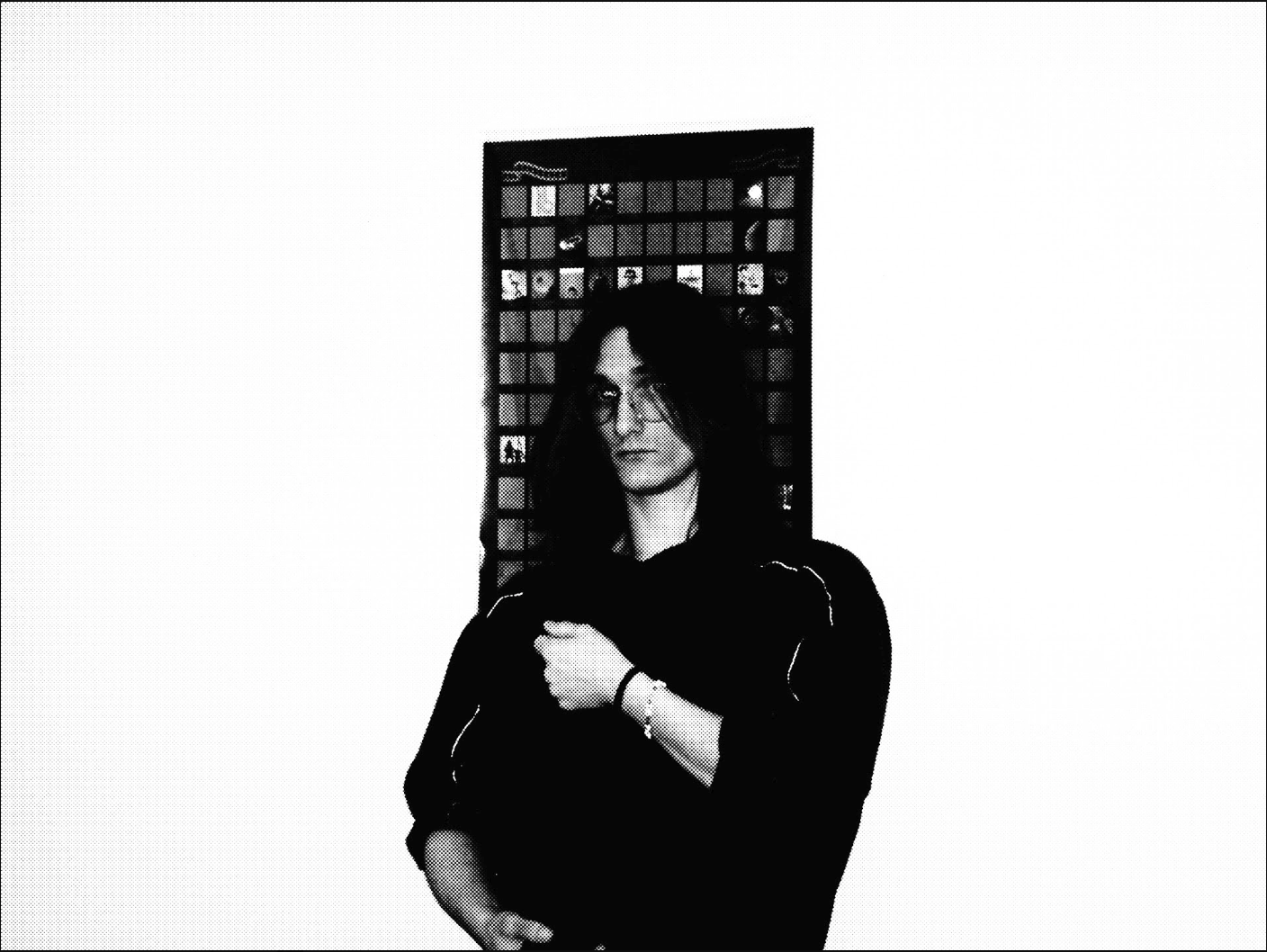
Q&A by Kasey Paquette | Photo by Caleb Mitchell
Caleb Mitchell is a senior Graphic Design Major, who plans to share his love for all things artistic with others once he graduates. As he’s just started his internship and is preparing for graduation, here’s what he had to say about his artistic passion.
Q: What first started your passion for graphic design?
A: Music. I remember being online and going to websites where you could download music for free, and I just love the art that was on there. I think it was the first time I really explored music on my own. And through that discovery of…the music that I wanted to listen to, that art was also there.
Q: Over time, what has been the coolest or most interesting project you've had fun working on, and why? It could be school-related or anything else.
A: I think I have two favorites. One is when I worked for Reach Records to design canvases for Spotify. And then the other one would be this most recent project that I completed for an artist named Dimitri Lavender. And we worked on a project called Lavender's Lounge, which was a very pointed and unique take. And we tried to take his music and make it an experience that you could think into, or that felt very physical. I think we were able to do that with the art as well as the vinyls.
Q: Because of those things you've worked on, what kind of career do you hope to pursue with your degree after college?
A: I think I'll always have a love for music and film, especially as physical media as well. I think that the experience of intake of that, of this kind of art can be so incredible and so grounding and allow you to relate to other people as a person. So I would love…to work in an industry that kind of does that. But I also have really been considering getting a CTE…where I could go and teach middle schoolers and high schoolers about graphic design…I would love the opportunity to present them with the world of art, movies, and other physical media that I just truly adore so much.
Q: How would you describe your specific design style? Do you have [a watermark] you leave on your projects once finished, that's your signature? If so, what is it?
A: I don't. I used to a long time ago, when I first started experimenting with Photoshop, I pirated it, and I would put my name in the bottom corner of every you know, album cover I did for somebody who I knew needed one, or a friend, or whatever I was doing. So I used to do that, but not anymore. And in terms of style, I feel like I'm always trying to push a boundary in some sort of way, and it's not in every project, but especially in the things that I care about. I am trying to do something I think is unique and innovative, which I think most artists also try…I want things to necessarily sometimes feel unfinished or I want the work to leave you feeling more, but in a positive way…that leaves you wanting more, but you're also excited about it…[and] that is more of a style in terms of how I approach design, maybe not necessarily in terms of visuals, but maybe as a philosophy in how I design.
Q: [So] do you think your biggest sense of inspiration comes from that, in terms of getting started on a new project, or something else?
A: Yes, I mean, I love film, and I love music so much I have, you know, only a handful of vinyls, but I have, you know, 200 VHS tapes I love, like DVD extras and cassettes and things like that. But I think, you know, things like that are particularly inspiring to me, because they feel like a piece of the past, but they're also very much [to me] the key to the future and how we relate to people. You know, as I feel the collapse of…the fading of the digital age, [this] begins to become stronger. I think as people truly do desire to go and touch grass or to take away [from] their screens. You know, I think that we're definitely going to see this change in this turn from people wanting to be online to wanting to be outside in a more genuine way [than] I think we have ever seen, especially because recently has felt very performative, but I feel that there's this coming of real tangibility and relationships. I think that another great example is [that] I love niche small blog creators on YouTube [who] are really inspirational. There's this one channel, Ida's Corner... I love her videos, and that channel is one of the things that inspires me most in terms of design as well.
Q: Do you think there's any project you've done so far that has been the most challenging but still enabled you to take something important away from it? [Maybe] it taught you something important in it being difficult?
A: Lots of the projects that I've done are very challenging in various forms, right? I on an individual level…unfortunately, makes the project most challenging is not even truly the work itself, but it is how life is going on around me. When I am designing a lot for my job, freelance or for school, when I have lots of design work to do, it can be harder to make good things or make the things that I want and feel like I'm doing a good job at that. [And] so in terms of particular challenges, I'm thinking there's a current project I'm working on right now that I can't talk about yet that has been very challenging because it's the first time where I've been working a design job part time, and I'm doing classes full time, but then I'm also doing freelance work. So having these three things kind of constantly drawing from my creative well can be exhausting, and can make it a bit frustrating when I'm trying to constantly be creative, but I have no time to live regular life or to draw inspiration from things because I'm always working.
Q: If you had the free time to do anything, design, anything in the world with no restrictions that everyone would see and know was your work, what would it be and why?
A: So I'm currently working on a project…with a couple of my close friends, on the student art exhibition [that] I want to make a really big impact. I want everybody to be able to see it…I don't want to make people uncomfortable, but I want to push the comfortability, and I want to cause a level of severe reflection and retrospection that can feel lacking, I think, just in the moment we live in generally. I don't want to talk too much about it, but you know, if I'm able to get everything worked out, there should be a big thing at the Student Juried Exhibition in April or in May.
Q: How would you say your skills as a graphic designer reflect who you are as a person?
A: I think my design work reflects the duality of who I see myself as [as] a person, as somebody who is an artistic person or creative. I'm constantly wanting to be messy and do new things and push boundaries, but I also love being organized and tidy, and sometimes that can cause a little bit of a clash in my work, but also in my personal life, where…I want things to be neat and perfect, but I also know that you often have to break out of the box or get your hands dirty…to do anything that is worth doing or seeing, or that may inspire other people. I think that in a lot of my work, it is the duality of how I view myself as somebody who is chaotic but also very organized and measured. You can often see that within the variety and the kind of work that I produce, whether it fits tour merch for Willoh or…single covers for an upcoming project, or posters or postcards…you know, I can allow myself which part of how I view the world to be shown through my art in that way.
Q: Is there anything else you think people should know about graphic design, specifically for people who are interested in getting their feet wet in it, or if there's anything else we haven't already talked about?
A: When it comes to design specifically, it can be challenging to, I think, have a good grasp on what is art and what is work, right? Because, you know, graphic design can tend to seem very art-forward. And as an artistic person, there is a lot of design work that I do that I would consider art, but also recognizing that graphic design is a very broad and varied field…if you're going into design work hoping to be an artist, you can do that. But also so much of the design world, in terms of work, is very much boring and mundane. If you're good at that, and you don't mind it…I would encourage it. It's all about…where you find important to spend your energy. So if you are cool making, you know, billboards that you don't really care about, but feel like you can do a good job and recognize that…this thing that you're producing is work…you'll be well on your way. But I think that [for] too many people, especially in our program now, it's easy to fall into the trap of I like making art. I like doing this design work, right? But then you get stuck realizing, oh, this is a part of the capitalist system that we're in that is that kind of abuses labor...Design can be everything that you want it to be, and it can also be nothing that you want it to be. It can be a great thing, and it can be the most frustrating, infuriating thing that feels like the largest waste of time you've ever experienced. So I think…go slow, take your time, and ultimately, put the weight and the energy into the things that you care about the most, and…figure out what is the most important to you, so that process is made easier.
Interview has been edited for clarity and length.