
Cool Cat: Tim Sorey
Q&A by Laura Allen, photos supplied by Tim Sorey and Alexandra Gamache
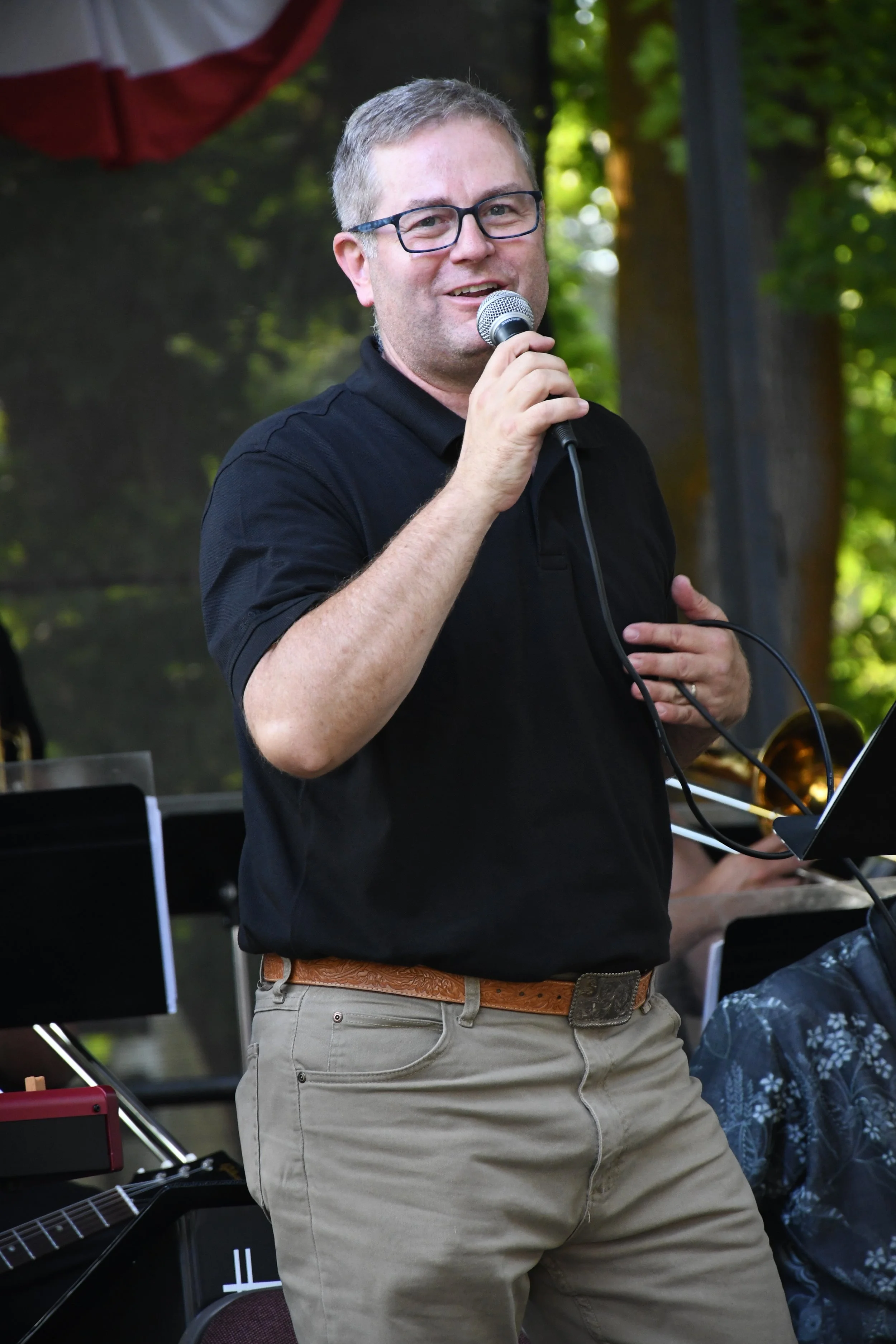
Dr. Tim Sorey, co-chair of the Chemistry Department, is a professor of science and math education and chemistry who has been working at CWU for over 21 years. When he isn’t teaching, conducting research or providing undergraduate and graduate science students the opportunity to teach or conduct their own research, he also volunteers in the Ellensburg Big Band as a singer. Passionate about chemistry, education, and music, Sorey demonstrates how to blend those interests together and lead a fulfilling life.
Q: What is your role on campus?
A: “I am a full-time professor in the chemistry department and the science and math education department, so I'm in a dual position. I teach general chemistry from Chem 101 to Chemistry 111, which is in the general organic biochemistry series for nutrition scientists, engineers, and people who are going into healthcare and nursing.
I also teach the STEM majors chemistry, Gen chem—Chem 181, 182, and 183. One of those labs is where I get to meet on-track kids—students, future chemists, my future bosses. Sometimes they come back and learn how to support students through tutoring and TAing...and I try and support these young aspiring educators of science.
...I am currently co-chair [of chemistry] with Todd Kroll. I go to those department meetings and advocate for students, staff, faculty, and the chemistry department to try and provide students a pathway forward in their bachelor’s or master’s programs, so that when they graduate, they have a career opportunity.”
Q: What is your favorite thing about teaching?
A: “My favorite aspect of being in an educational environment alongside students is to humbly share it, knowing that I’m going to learn something too. Everybody comes from such a diverse background, a family of circumstance, that unless you get to know the person, you can’t educate the whole individual. My favorite aspect of learning and teaching is figuring out what drives the individual…providing a space for them to be themselves and explore what their future career might be.”
Q: How did you come to select chemistry as your research and career path?
A: “I didn’t know what I wanted to be until I had an excellent math professor and excellent science professor who said, “You’re getting the hang of this. Could we talk you into tutoring some of these subjects alongside us?”…Once I realized that I wanted to be in education, I chose chemistry as my vehicle.
Chemistry’s got a lot of math and trying to figure out how nature manifests in the real world. I find comfort in patterns and data that are both qualitative and quantitative, so I can share those patterns and say, “Hey, isn’t that cool what we just saw? There are some things similar to this. If you trust me, let’s go take a look at that together.”
Sharing with other people, living vicariously through them by them seeing it for the first time, that’s the manna from heaven, if you will. That’s what feeds me.”
Q: Were there other career paths or that you considered besides chemistry?
A: “Too many. That’s what took me so long. I come from a family who are farmers in the southeastern part of Washington and the northeastern part of Oregon. When I finally realized that I didn’t want to be on implements, sole and solitary out in the field, and I needed to be around other humans, that was a big, eye-opening what am I going to do the rest of my life? I tried different aspects, and education and chemistry popped up. It looked like an honorable profession and something to do that could keep me busy, and I haven’t looked back.”
Q; What things do you do in the local community, and what drives that involvement?
A: “I think it’s important to keep your health and well-being mentally and physically. So I like hanging out with my daughters, who are twins. One of them plays football, so we play a lot of catch. One of them is in dance and drill. No, I don’t dance and I don’t drill, but I go and observe.
…I also think it’s important to give back. I am a singer in the Ellensburg Big Band. It’s an LLC, so we put on a lot of gigs by way of support. They’re pro-bono, they’re free.
We have musicians, lawyers and doctors, professors, students of music, and people who’ve graduated. We will do fundraisers or we’ll do private gigs…and share the gift of dance. Dancing and music bring other people health and well-being…Doing that arts side of my brain actually relaxes me to where I can do the science part of my brain.”
Q: I’ve noticed there are a lot of chemistry students who enjoy doing music. Do you think there’s any kind of correlation between that?
A: “There’s something to be said about science and seeing patterns of mathematics that pair well with the arts, and seeing patterns in painting or music…The arts are a huge overlap in human seeking patterns. That’s what we do. We taste, we touch, we feel the five senses.
…Artists are looking for more vibrant colors, so what do they do? They dig into the palette of paint and see what different minerals and geology they can suspend in oils to create the color they want to see on the canvas.
I think the whole person is not just defined by that one thing they do or that one really cool thought experiment. It takes the whole person to get to that pinnacle point. And I don't have those huge pinnacle points, but I know that I'm going to have some students who will. So I live through the glory of some of my student exercises, and I'm really impressed with what some of my students have done. I humbly provide a space for them to try and have that opportunity.”
*This interview has been edited for clarity and length.