
Cool Cat: Soren Engström
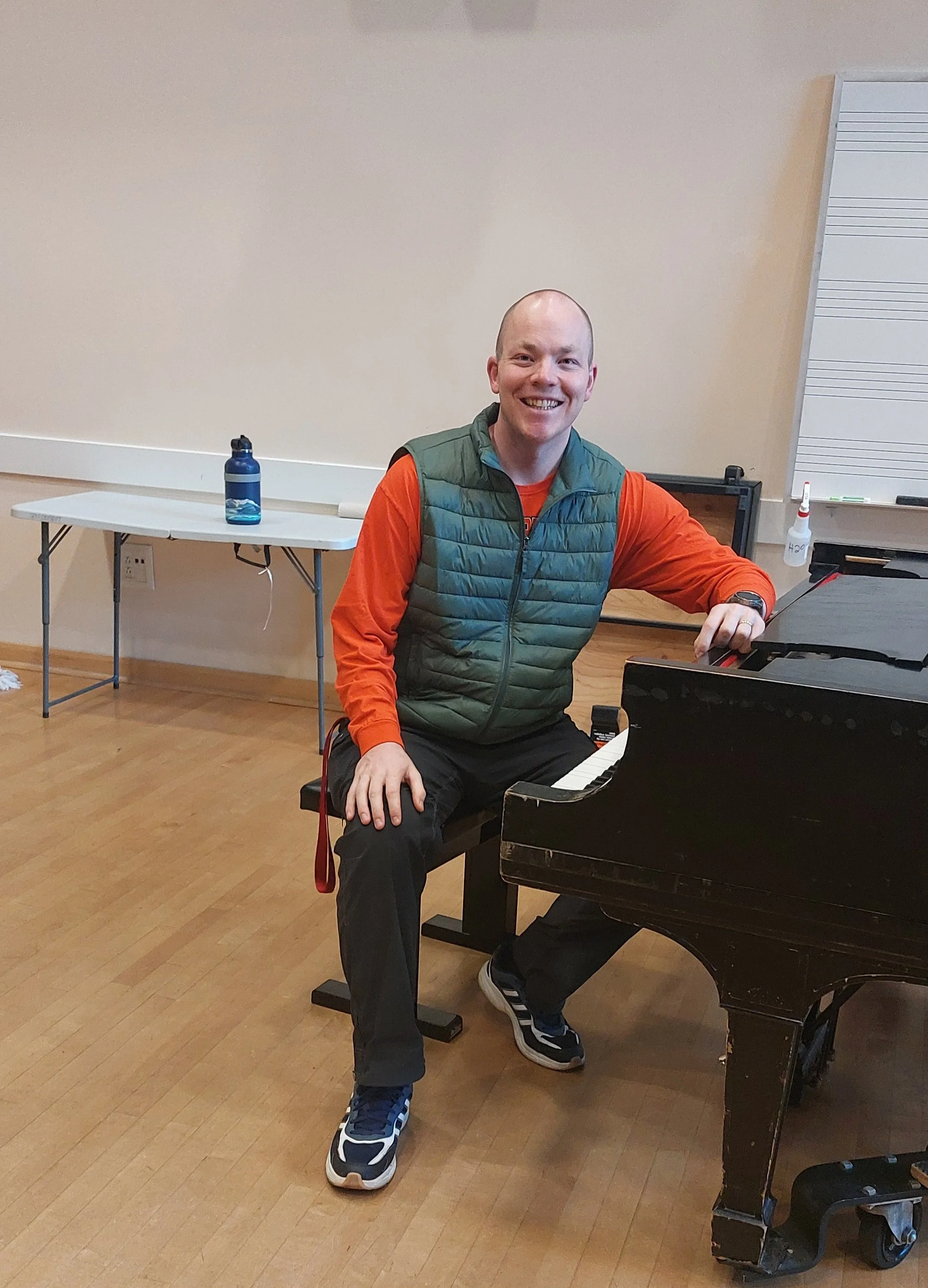
Q&A and photo by Hope Cox
Soren Engström is a graduate choral student at Central Washington University (CWU). Engström spent the Fall 2025 conducting “Music When Soft Voices Die,” text by P.B. Shelly, arranged by Charles Wood and edited by Stuart McIntosh for CWU’s Vox Divina [treble voice choir]. Under the leadership of Dr La [Nicole Lamartine, Director of Choirs], Engström directed a powerful performance of longing for a loved one at the Fall Choral Classic Festival and the Fall Choir Concert.
Engström is a welcome addition to the choral program here at CWU. His energetic and humorous personality, combined with his earnest passion for music, inspires the students under his leadership to make the best music they can and to continue making music, whether here at CWU or beyond.
Q: What brought you to Central?
A: Well, I had the opportunity to work with Dr La when she worked at the University of Wyoming when I was in high school. And the choirs there were really spectacular. So, when I was looking at master's degree options, my criteria were people who I wanted to emulate as a conductor and a musician. And she was on that list. So, I sent an email, and she said, “Yes, please come audition.” And now here I am. Also, there are some Central alums who teach in my hometown in Casper, and they spoke really highly of Professor Singh as well. Vocal jazz was what got me into choir in high school. So, I wanted to come here because it was one of the places where I could pursue really high-level classical-style music and jazz at the same time. That's hard to find.
Q: Why did you decide to become a choral conductor?
A: In high school, choir was my favorite class, and I wanted to be a choir teacher. I took a really long and circuitous route to get there. I became a teacher, and I realized after having some really positive experiences in college that the place I wanted to work was with this kind of choir because there's a more mature sound. It takes a really special and talented person to spend their time working in a high school or junior high, and I found that I was not fulfilled in the way I wanted to be. Not to say that it wasn't great. There are some spectacular moments, but I kept craving music that's just – it's the music you give to a choir like this that younger singers maybe just aren't ready for.
Q: What was it like working with Vox Divina?
A: It was a blast. It was so much fun. I love the fact that everybody here is happy to be here, and they lift each other up. The environment in this room is positive all the time. I have been in choirs, both as a singer and a leader, where that was not the case. It's just – I don't know. There's something special about a treble choir. Every time you get an opportunity to work with it, it's really special, especially in a place like this, where everybody was so excited and wanted to work hard. I didn't have to ask or remind. Things just happened. It was a great environment.
Q: What challenges did you face while working with Vox Divina?
A: It's tricky to be, I guess, biologically male and work with a treble ensemble because a lot of your instrument physically is just different than mine. So the ranges you're asked to sing in aren’t always comfortable for me. You have to balance. If I sing with this voice, what's that going to do to the sound I get from the ensemble? But if I sing with this voice, you can't maintain falsetto without fatigue forever. So I spent a lot of time working with Dr La on the specifics of the treble register and which places you have catches and where this sound or that sound comes from. Like we talked about today, moving the head voice down. I'm obviously familiar with a bass voice. So when I work with tenor bass chorus, it's easy because I can say, “This is what it feels like.” For the most part, it's the same, but your ensemble has a vastly different set of needs and expectations, and I've just never really had anyone to teach me how to work with that because I didn't grow up with one.
Q: What is it like to work with non-music majors?
A: I think it's better. Okay, let me rephrase. Better and worse. Obviously, music majors have a more vested interest in the success of any endeavor because it's a reflection of their craft and their department, but the people who come to sing who are not music majors come because singing is what's most important to them. A lot of the baggage that goes with it, I am a musician, and I need to be the best and I have to prove myself every time I step onto the risers. You don't get that from non-majors. They're here because they love it, and I think that that's a really powerful and important thing to honor in any ensemble. The goal, at least for me, is not to create ensembles full of the best musicians in the world in this setting. It's when you leave, you graduate, if you never sing in another organized school choir again, but you move to a town that has a community choir, do you feel like you could make music for the rest of your life? I think non-majors really help with that because they bring experiences and they bring thoughts that music people don't have because we live in the same world all day long.
Q: How was the concert?
A: It was great. I was so nervous. It was my first grad school concert and my first time conducting a collegiate ensemble. There's a lot of pressure and a lot of thinking, and two days' worth of choral festival right before. But I thought it was the best we sounded across the board, universally. You hit the peak right when the audience is there, and it was fun to just be a musician again and not have to worry about, oh, I'm going to have to tear down the risers afterwards and did all the parents sign their permission slips and all of that stuff, and oh, there's a staff meeting tomorrow morning. I got to be a singer and a conductor and a listener, and that was the best part. All of this music I had never heard before. I think we sounded great with “When Soft Voices Die.” I think it was our best performance. Love it so much, and “Szello Zug” was amazing. “What Happens When a Woman Takes Power” was amazing. It was great.
Q: What is it like working with Dr La?
A: Oh, boy. She's wicked smart, and she has high standards, but she's willing to meet you where you are and help you understand how to grow and get better. I think that's a universal truth, and for me, the biggest thing is she is willing to explain why. I'm a question asker, and to a fault sometimes, because I always want to know more. I want to know, why do we do it this way? Why don't we do it this way? How does my version of things stack up against it? She's patient and willing to explain and has good justification for everything she says. I think that's a rare quality, because there are definitely people who use a lot of words and maybe don't know what they're talking about.